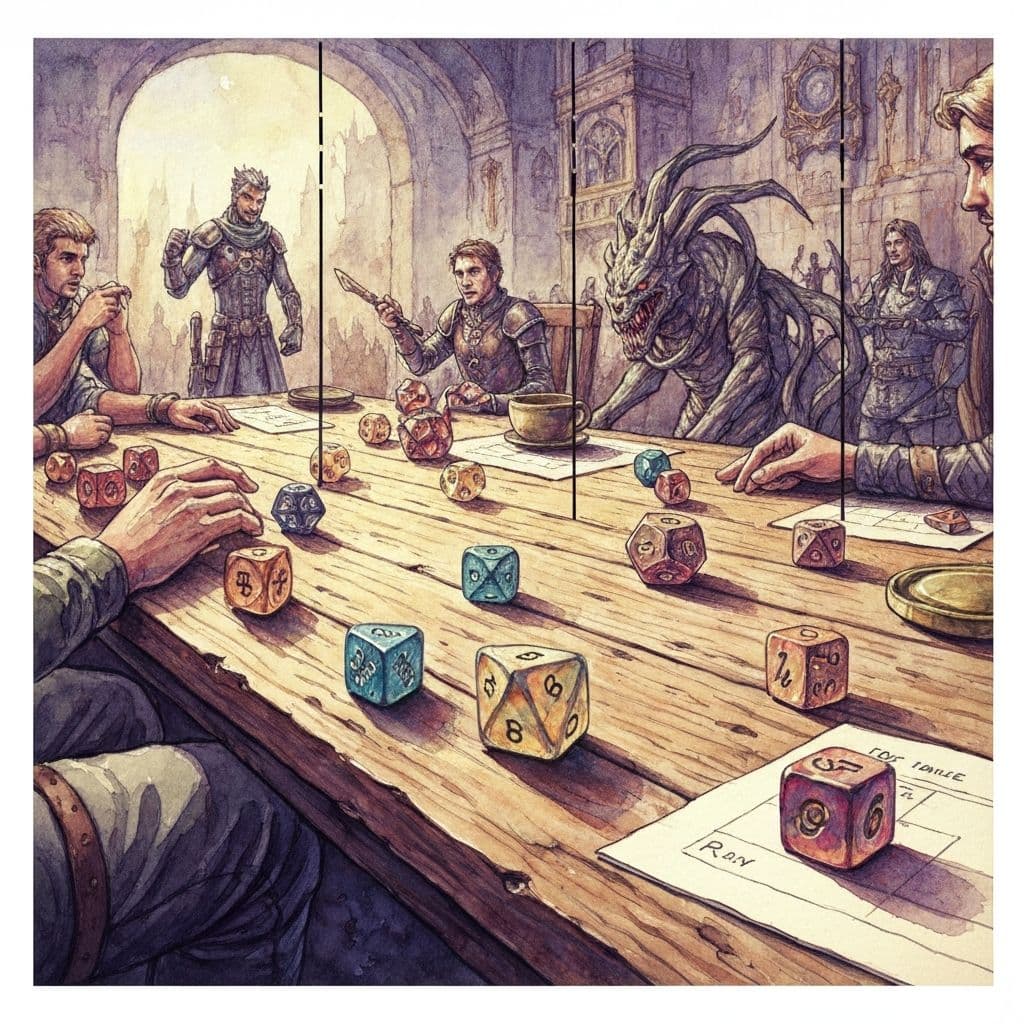
A great Trickster isn't just a storyteller—they're a facilitator of fun. Managing player dynamics ensures everyone at the table has a memorable experience.
🎯 SPOTLIGHT MANAGEMENT
The Spotlight Principle
Every player should have moments where they shine. Track spotlight time mentally:
- • Equal Time: Each player gets roughly equal focus over a session
- • Strength Moments: Create situations where each character's skills matter
- • Character Arcs: Rotate which personal stories advance each session
- • Combat Balance: Design encounters where everyone contributes
Spotlight Distribution
| Scene Type | Who Gets Spotlight | How to Shift |
|---|---|---|
| Combat | Combat-focused characters | Add environmental puzzles, social elements |
| Social | Charismatic characters | Include NPCs with specific interests |
| Exploration | Perceptive/skilled characters | Require diverse skills to progress |
| Mystery | Analytical players | Spread clues across different specialties |
🗣️ ENCOURAGING QUIET PLAYERS
Engagement Techniques
- • Direct Address: "Alex, what does your character think about this?"
- • Private Moments: "While the others argue, you notice something..."
- • Skill Requests: "This requires [their specialty]—how do you approach it?"
- • NPC Attention: An NPC specifically addresses or seeks out their character
- • Check-Ins: Between scenes, ask if they want to do anything
Understanding Quiet Players
Quiet doesn't mean disengaged. Some players:
- • Process Internally: They're engaged but don't vocalize
- • Prefer Observation: Enjoy watching the story unfold
- • Need Permission: Wait to be invited to contribute
- • Are Overwhelmed: Louder players crowd them out
- • Are New: Still learning when to speak
🔊 MANAGING DOMINANT PLAYERS
Redirect Techniques
- • Inclusive Pause: "Hold on—let's hear from everyone before deciding"
- • Split Focus: "While you do that, what is [other character] doing?"
- • Limit Actions: "You can do one thing—what's most important?"
- • Private Word: Speak to them after the session about sharing time
- • Mechanical Limits: Actions have in-game time costs
When Dominance is Helpful
Sometimes a decisive player helps the group:
- • Breaking analysis paralysis
- • Modeling roleplay for new players
- • Taking leader role when appropriate
- • Keeping momentum when others are hesitant
The key is ensuring they share rather than exclude.
⚔️ CONFLICT RESOLUTION
In-Character vs. Out-of-Character
| Signs of IC Conflict | Signs of OOC Conflict |
|---|---|
| Players laugh about tension | Players seem genuinely upset |
| Conflict serves the story | Conflict derails play |
| Players discuss character motivations | Players attack each other's decisions |
| Tension ends when scene ends | Tension persists during breaks |
Conflict Resolution Steps
- 1. Pause: Call a break if tension is high
- 2. Separate: Talk to players individually if needed
- 3. Identify: What's the actual disagreement?
- 4. Validate: Acknowledge both perspectives
- 5. Negotiate: Find a solution that works for everyone
- 6. Implement: Return to play with agreed resolution
🎢 MAINTAINING ENGAGEMENT
Signs of Disengagement
- • Phone checking, side conversations
- • Monosyllabic responses
- • Lack of initiative ("I follow the group")
- • Visible boredom or frustration
- • Leaving the table frequently
Re-Engagement Strategies
- • Immediate Threat: Something attacks or addresses them directly
- • Personal Hook: Connect scene to their backstory
- • Change Pace: Switch from social to action (or vice versa)
- • Ask for Input: "What would make this more interesting for you?"
- • Take a Break: Everyone needs snacks and bathroom breaks
🎁 REWARD SYSTEMS
Narrative Rewards
Beyond XP and loot:
- • Character Growth: Backstory elements resolved
- • Reputation: NPCs remember and react to past deeds
- • Relationships: Meaningful connections with NPCs
- • World Impact: Player choices change the setting
- • Knowledge: Learning secrets about Nowhere Land
Reward Personalization
Different players value different rewards:
| Player Type | Valued Rewards |
|---|---|
| Achievers | XP, loot, character power |
| Explorers | New areas, secrets, lore |
| Socializers | NPC relationships, faction standing |
| Story-Lovers | Character arcs, narrative moments |
🛡️ SAFETY TOOLS
Essential Safety Tools
- • Lines: Topics that never appear in play (discuss in Session Zero)
- • Veils: Topics handled off-screen, briefly referenced
- • X-Card: Any player can tap/say "X" to skip a scene
- • Open Door: Players can leave at any time, no questions asked
- • Check-In: Regularly ask "everyone okay with this?"
When Safety Tools Activate
- 1. Acknowledge: "Okay, we're skipping this"
- 2. Redirect: Move to a different scene or outcome
- 3. Don't Discuss: No explanation needed during play
- 4. Follow Up: After session, check in privately if needed
- 5. Adjust: Add to Lines/Veils for future sessions
“
"The best session isn't the one with the most dramatic story—it's the one where everyone leaves wanting to play again."
— — The Trickster's Measure of Success
”