
The percentile resolution system and sanity mechanics influenced NOWHERE LAND's approach to resource management.
A collection of creative prompts, themes, and ideas to fuel your Nowhere Land campaigns.
Find the spark for your next adventure in Nowhere Land.
Explore the deeper questions that drive Travelers through the domains.
You were someone, once. A teacher, a thief, a soldier, a dreamer. You had a name that fit, a place that felt like yours, a rhythm to your days. Then the portal opened. It wasn't dramatic—no swirling vortex, no thunderclap. Just a door that wasn't there before, or a reflection that moved wrong, or a sound that pulled you forward. The next thing you knew, you were here, in Nowhere Land, where the sky has too many colors and the ground remembers your footsteps. The portals don't explain themselves. Some say they're tears in reality, opened by the weight of human longing. Others believe Nowhere Land is alive, reaching out to pull people in. The truth is simpler and more terrifying: no one knows. What matters is that you're here now. The domains stretch out before you—Jungle, Desert, Mountains, Tundra, Ocean—each with its own rules, its own dangers, its own strange beauty. The Count watches from somewhere, always watching, always waiting. And you have to find your way. Your past doesn't define you here, but it shaped you. The skills you learned, the relationships you built, the person you became—all of that came with you through the portal. Nowhere Land doesn't erase your history. It adds to it. This is your origin story. Not the one you left behind, but the one you're writing now.
The percentile resolution system and sanity mechanics influenced NOWHERE LAND's approach to resource management.

Passions, Runes, and mythic resonance shaped how Essences function as both mechanical resources and narrative anchors.

The Glory system and Personality Traits influenced The Count's Ledger.

Position and effect, the stress system, and fiction-first resolution informed how the three maneuvers work.

The intricate web of vampire politics, personal horror, and the struggle between humanity and monstrosity influenced the social dynamics of domains and the tension between traveler identities.
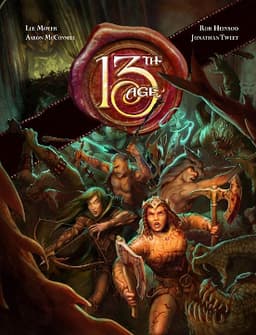
The flexible character creation, iconic relationships, and streamlined mechanics inspired the Echo system and how personal backgrounds create narrative hooks.

Hexcrawl exploration, stronghold building, and the Year Zero Engine's push mechanics shaped domain traversal and bastion management.

Minimalist design that trusts the fiction over mechanics, where strange artifacts and failed careers define who you are more than any stat block ever could.
A rules-light adventure game built on Into the Odd's chassis, where the forest itself is a character and exploration means risking everything you carry.
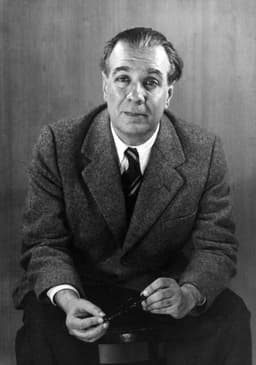
The Argentine master's explorations of infinite libraries, forking paths, and impossible architectures are fundamental to Nowhere Land's metaphysics.

An encyclopedia of an imaginary world written in an undecipherable script. The ultimate example of worldbuilding as artifact.
The wardrobe as a portal between worlds, the deep magic that governs reality, and the idea that children can stumble into realms where time flows differently — these are the bones of every portal fantasy that followed.
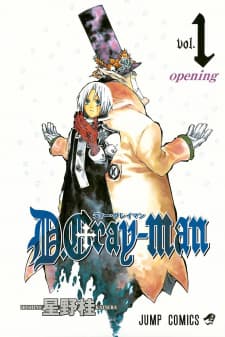
Gothic atmosphere, mysterious benefactors, and visual aesthetic of dark fantasy.
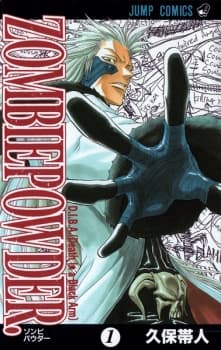
Barrier magic, inherited duties, and liminal spaces between worlds defined the Partisan boundary mechanics.

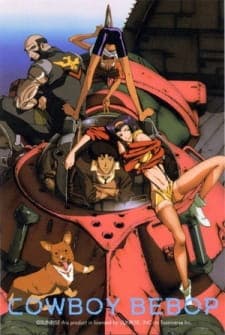
Being trapped in another world, identity dissolution, and the blurred line between reality and virtual spaces.
Children transported to a digital world, partnered with strange beings, growing through adversity.

Soul Society's baroque hierarchy, zanpakuto manifestations, and the weight of spiritual pressure shaped domain politics and Potential mechanics.

The unbearable weight of sacrifice, children forced into cosmic conflicts, and the question of what's worth protecting.
A Czech-French animated series where a tiny moth named Mot discovers strange worlds within everyday objects, each one a self-contained universe with its own rules and inhabitants — a perfect analog for domain exploration at miniature scale.
Virtual worlds layered over reality, digital entities, and the struggle to maintain identity between worlds shaped the mechanics of domain traversal and digital consciousness.
Infinite dimensions treated as disposable commodities, the portal gun as both liberation and curse, and the existential dread hiding beneath nihilistic humor all resonate with Nowhere Land's treatment of reality as something that can be torn open and walked through.
The globe-trotting adventurer who faces ancient civilizations, lost worlds, and secret organizations provided an early template for the kind of pulp exploration that Nowhere Land channels through its portal adventures.
A French manga where sleepers share a collective dream world with real consequences, where dying in the dream means dying in reality — a premise that maps directly onto domain traversal's mortal stakes.
Kazuo Umezz's horror manga about an elementary school transported to a barren future wasteland, where children must survive without adults in a hostile alien landscape — survival horror that parallels the disorientation of first entering a domain.
A group of people are transported via mysterious phone calls to a ruined future Japan called Psyren, where they must survive and develop psychic powers to fight back — a portal-and-powers narrative that mirrors Nowhere Land's core loop.

Also: Daodejing, 道德經, Laozi, The Book of the Way
Lao Tzu's foundational Taoist text explores the nature of reality through paradox and emptiness. The concept of wu wei (non-action) informs the Null.
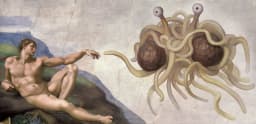
Also: Pastafarianism, Church of the FSM
Bobby Henderson's satirical religious text reminds us that worldbuilding can be playful, absurdist, and still internally consistent.
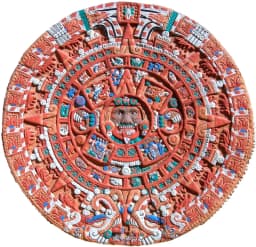
Pre-Columbian Mesoamerican religion presents a cosmos of cyclical destruction, blood debt, and interpenetrating realms.
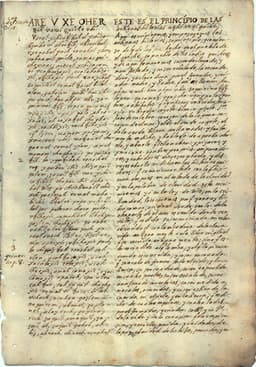
The Popol Vuh, Dresden Codex, Madrid Codex, and Paris Codex preserve Maya cosmology—a world of Hero Twins, death lords, and the road to Xibalba.
Rather than prescriptive story, NOWHERE LAND focuses on systems that generate meaningful choices.
Every Essence spent, every debt accrued, every harm taken tells a story.

The book itself should feel like an artifact from the world.
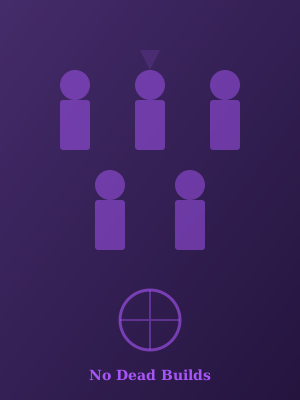
Every character archetype should feel viable and interesting.
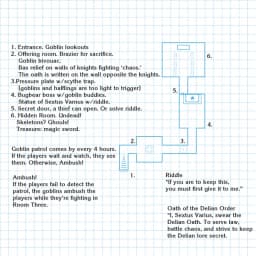
Matt Colville's 'Running the Game' videos and MCDM's public development show design-in-public and playtest-driven craft.
Peter Lange's channel walks through building a TTRPG with clear design videos, playtests, and public project updates.

FibreTigre experiments with ludonarrative and interactive storytelling through streaming and narrative design.
Elegant borders, sidebar marginalia, and clear information hierarchy.

Color theory, texture, and thematic consistency create immersive reading experiences.

Medieval manuscripts and alchemical texts inspired integration of imagery within text.
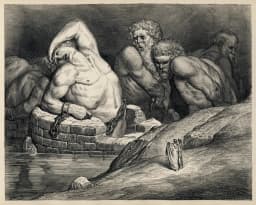
Dramatic chiaroscuro and the sense of the sublime shaped visual identity.
NOWHERE LAND is part of a continuum of games that explore what happens when ordinary people step through the veil into the extraordinary.
If you see echoes of your favorite games here, know that they're intentional. NOWHERE LAND is a love letter to the hobby.