Rituals, Techniques & Tactics for Memorable Sessions
Who is The Trickster?
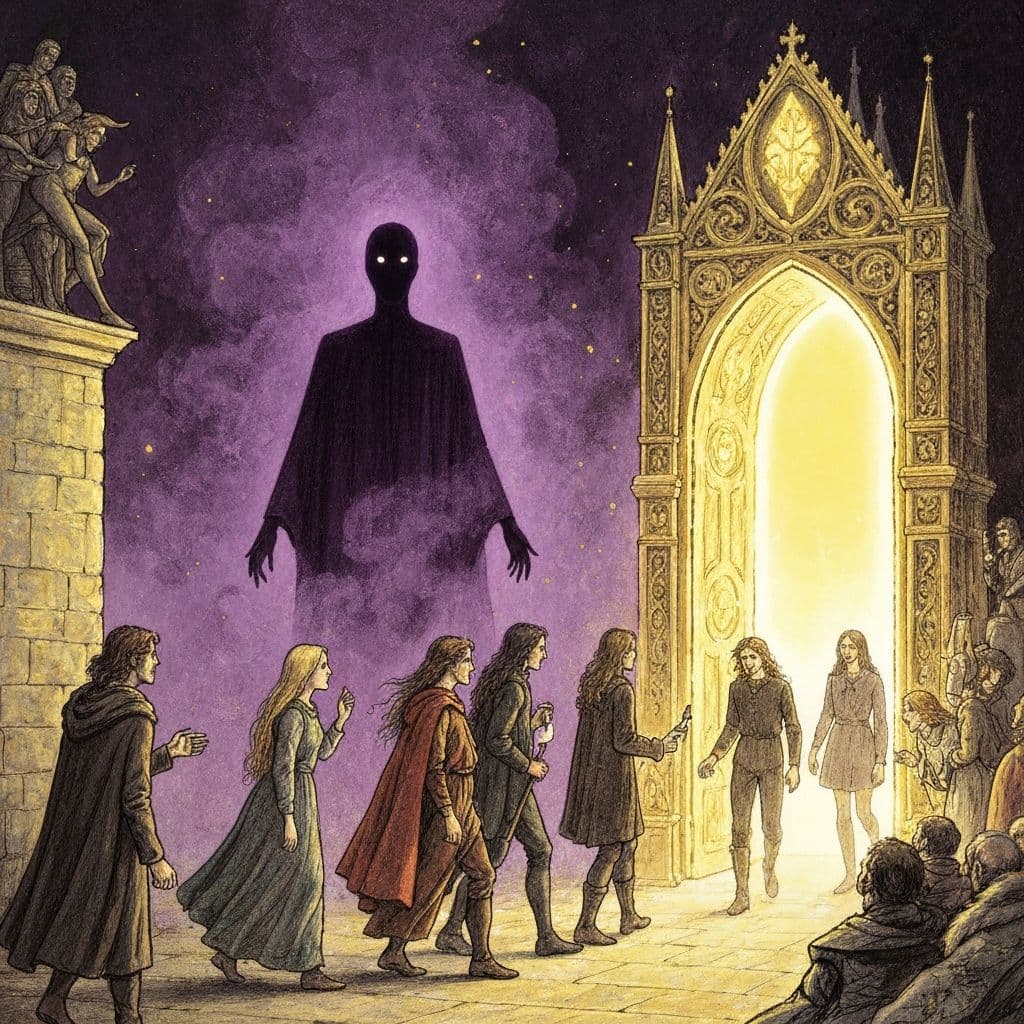
In NOWHERE LAND, the Game Master is called The Trickster—inspired by The Count himself, the shapeshifting facilitator of portals, deals, and drama. Like The Count, you wear many faces: worldbuilder, referee, narrator, challenge designer, and occasionally, antagonist.
Your role is not to defeat the players, but to create memorable experiences through meaningful challenges. You are the keeper of mysteries, the voice of domains, the hand that guides travelers through wonder and horror alike.
This guide provides rituals (session structure), techniques (storytelling craft), and tactics (player engagement strategies) drawn from both game theory and the psychological principles that foster deep group cohesion.
Part I: Establishing Rituals
Rituals signal to players that it's time to step from the real world into Nowhere Land. They create safety, immersion, and consistency—the foundation of memorable campaigns.
Ritual 1: The Session Opening
Purpose: Create a "loading screen" for players' minds, signaling the transition from everyday life to the game world. This reduces distractions and increases immersion.
Recommended Opening Structure:
- Gather & Settle (2-3 minutes): Players arrive, get snacks, chat casually
- The Signal (30 seconds): A consistent ritual that marks the start
- A group chant or phrase ("Through the portal we go")
- Lighting a specific candle or incense
- Playing a signature song or sound effect
- A ceremonial dice roll (everyone rolls d6s simultaneously)
- A toast with drinks
- Recap (2-3 minutes): Briefly summarize the previous session, ending with a cliffhanger reminder
- The Drop (5 min): Jump directly into the action—no preamble, just immersive description
Example Opening:
"Everyone ready? Good. [Lights candle] We begin. Last session, you stood at the Threshold between jungle and desert, Kessa beside you, watching something massive circle overhead. Let's find out what happens next. [Pause for 2 seconds] The shadow passes again—closer this time. Roll Umbra + Drop to track its movement..."
Ritual 2: Create Table Language
Purpose: Develop shared terminology, inside jokes, and catchphrases that make your table feel unique and special. This creates in-group identity and strengthens player investment.
How to Foster Table Language:
- Rename Core Mechanics: Instead of "critical success," your table might say "The Count smiles." Instead of "TPK," perhaps "Null absorption."
- Create Catchphrases: When someone does something amazing, the table responds with a shared phrase ("Witness!" or "Partisan-worthy" or "The Ledger remembers").
- Nickname NPCs: Let players create nicknames for recurring NPCs—"Stabby Steve" for a paranoid guard, "Mom Friend" for a protective domain spirit.
- In-World Slang: Introduce Partisan words beyond the core vocabulary—terms only your travelers know.
Why it works: Secret languages create psychological boundaries between "us" and "them." Players feel they're part of something exclusive, which increases attachment and attendance.
Ritual 3: The Session Closing
Purpose: Provide emotional closure, reflect on events, and build anticipation for the next session.
Recommended Closing Structure:
- The Final Scene (5 minutes): End on a cliffhanger, revelation, or powerful character moment
- Debrief (5-10 minutes): Ask players reflective questions
- "What was your favorite moment?"
- "What surprised you?"
- "What are you looking forward to next?"
- Reward Attendance (30 min): Give bonus inspiration or XP for consistent attendance streaks
- The Signal (Reverse) (3 min): Blow out the candle, play the closing music, or do the group chant again
After Intense Sessions: If the session was emotionally heavy (character death, moral dilemmas, horror), extend the debrief. Let players process feelings out-of-character, order comfort food, and explicitly separate player emotions from character emotions.
Part II: Storytelling Techniques
Technique 1: Lead with Confident Certainty
Core Principle: Your confidence in the world makes it real for players. Hesitation breaks immersion; certainty creates belief.
How to Project Certainty:
- Make Rulings Decisively: When players ask "Can I do X?", answer with conviction—even if you're improvising. "Yes, but it's Challenging difficulty" sounds better than "Um... I guess? Maybe roll... something?"
- Use Silence Strategically: Don't rush to fill every pause. Let dramatic moments breathe. A 3-second silence after a revelation is powerful.
- Tease Mysteries: Say "You don't know yet" or "That's part of the mystery" instead of "I haven't decided." This makes you feel like a keeper of secrets rather than someone making it up.
- Own Your Improvisation: When you improvise an NPC name or detail, commit fully. Write it down immediately to maintain consistency.
Example: Confident vs. Hesitant
Hesitant: "Um, I think... maybe the door is locked? Let me check my notes..."
Confident: "The door is locked. Ancient mechanism, rusted but intact. The keyhole glows faintly—Partisan script."
Technique 2: Lean Into Your Unique Style
Every Trickster has a distinct style—horror-focused, political intrigue, tactical combat, weird humor. Don't hide what makes you unique; make it your signature.
Finding & Amplifying Your Style:
- Identify Your Vibe: Are you gritty-realist? Theatrical-dramatic? Weird-horror? Puzzle-architect? Know your strengths.
- Physical Presence: Dress in a way that signals your game's tone. Wear a specific jacket, hat, or accessory—make it part of the ritual.
- GM Screen & Props: Customize your space. Use themed dice, a signature notebook, atmospheric lighting, or sound effects.
- Let It Bleed Into Content: If you love fashion, create domains with haute couture themes. Love military history? Design tactical combat scenarios. Your passion shows.
Why it works: Authenticity attracts players who want exactly what you're offering. A niche, distinctive game is more memorable than a generic one.
Technique 3: Forge Bonds Through Shared Hardship
Core Principle: The hardest moments create the strongest memories and deepest player bonds. Don't shy away from difficult challenges, moral dilemmas, or heartbreaking consequences.
How to Use Hardship Ethically:
- Don't Pull Punches: Make combats genuinely threatening. Let players fail skill checks with consequences. Enforce domain curses meaningfully.
- Create Moral Weight: Present choices with no "right" answer—save the village or pursue the villain? Protect your domain or help a stranger's?
- Allow Loss: NPCs can die. Domains can fall. The Ledger accumulates debt. Loss makes victories sweeter.
- Provide Support After: After intense sessions, debrief. Order pizza. Let players vent. Separate player from character.
Safety First: Establish Lines & Veils (content players don't want) and use safety tools like X-Card. Hardship should challenge, not harm.
Part III: Player Engagement Tactics
Tactic 1: Build a Player Roster (ABR)
Problem: Scheduling conflicts kill campaigns. Solution: Maintain a larger pool of players so games run consistently even when some can't attend.
How to Build & Maintain a Roster:
- Create a Discord/Group Chat: Invite 8-12 players who can attend semi-regularly. Only 4-6 need to show per session.
- Recruit Selectively: Don't beg. Approach potential players with: "I've noticed [specific quality] in you. I think you'd be perfect for my table—we're running a very specific kind of game."
- Make Them Feel Chosen: Frame the invite as exclusive: "I only invite people who I think will elevate the story."
- Normalize Drop-In Play: Use episodic structure or narrative excuses ("Your traveler was exploring another domain this week") to accommodate attendance.
Why it works: Scarcity creates value. Players who feel "chosen" for an elite group are more committed.
Tactic 2: Welcome New Players Warmly
Goal: Make new players feel immediately embraced, capable, and excited to return.
Onboarding Checklist:
- Give a Welcome Gift: A small dice set, a custom character card, or printed handouts make players feel valued
- Assign a Mentor: Seat new players between experienced, welcoming players who can guide them
- Guide Mechanically: In their first combat, suggest tactics: "Your Reach lets you borrow future dice—this is a good moment to try it"
- Spotlight Early: Give new players a cool moment in their first session—a successful challenge, a meaningful character interaction, or a narrative spotlight
- Check In Afterward: Message them after the session: "How did it feel? What did you think?"
Tactic 3: Reward Consistent Attendance
Purpose: Mechanically reward the behavior you want—players showing up consistently.
Attendance Reward System:
5 Sessions in a Row: +1 Inspiration die (usable once)
10 Sessions in a Row: +1 Heroic Inspiration (can turn a failure into a success)
20 Sessions in a Row: +1 Divination Die (can reroll any roll, even someone else's)
Bring Snacks: +1 Inspiration for the session
Write Session Recap: +1 Inspiration and everyone thanks you
Why it works: Gamification creates habit loops. Players feel special for contributing and prioritize attendance.
Tactic 4: Dynamic Initiative Management
Keep combat engaging with these initiative techniques:
- Popcorn Initiative: After a player acts, they choose who goes next (player or enemy). Creates tension and tactics.
- Group Initiative: All players act, then all enemies. Faster, more collaborative.
- Interrupt System: Let players spend Inspiration to interrupt enemy turns with reactions
- Count's Intervention: When combat drags, have The Count appear and change something—terrain shifts, new stakes emerge
Tactic 5: Ask Better Questions
The questions you ask shape player agency and engagement:
Types of Questions:
- Open-Ended: "What does your character do?" (encourages creativity)
- Specific: "Do you trust this NPC?" (forces decision-making)
- Collaborative: "What kind of shop would your character visit?" (shares worldbuilding)
- Consequences: "If you do this, X will happen. Still want to?" (creates informed choices)
- Backstory: "Have you encountered something like this before?" (weaves character history)
Avoid "What do you do?" Loops: If players are stuck, offer choices: "You could investigate the ruins, follow the tracks, or return to the village. Which appeals to you?"
The Trickster's Creed
"I am the keeper of portals between reality and imagination."
"I create challenges that matter, consequences that sting, and victories that resonate."
"I foster a table where every player feels seen, valued, and capable of greatness."
"I use uncertainty to build tension, certainty to inspire confidence, and mystery to ignite curiosity."
"Like The Count, I wear many faces—but always, I serve the story."
📚 Trickster's Library
Deep dive into specific aspects of running Nowhere Land. Each chapter provides detailed techniques, examples, and ready-to-use tools.
🎭 Running The Game
Core principles of running Nowhere Land: pacing, improvisation, and player engagement.
🕯️ Atmosphere
Sensory techniques, music curation, lighting design, and immersion tools.
🧭 Spatialization
The Compass Method: creating vivid spaces through dimensional descriptions.
🔍 Clues & Investigation
The Three-Clue Rule, mystery design, and information pacing techniques.
👥 Player Management
Spotlight sharing, conflict resolution, and safety tool implementation.
🎲 Player Archetypes
8 player types: Achiever, Explorer, Socializer, Storyteller, Optimizer, and more.
🛠️ Session Tools
Session Zero/Alpha checklists, GM screen references, and campaign management.
🛡️ Safety & Boundaries
Lines & Veils, X-Card, Script Change, and creating a safe play environment.
👁️ Five Senses
Engage all senses in your descriptions: sight, sound, smell, touch, and taste.
🎨 Yellow Paint
Guide players without railroading: subtle highlighting and environmental cues.
🎯 Random Tables
Quick-reference tables for encounters, NPCs, plot hooks, and improvisation.
© 2026 Joachim Mouffron. Part of NOWHERE LAND: The Null Handbook.